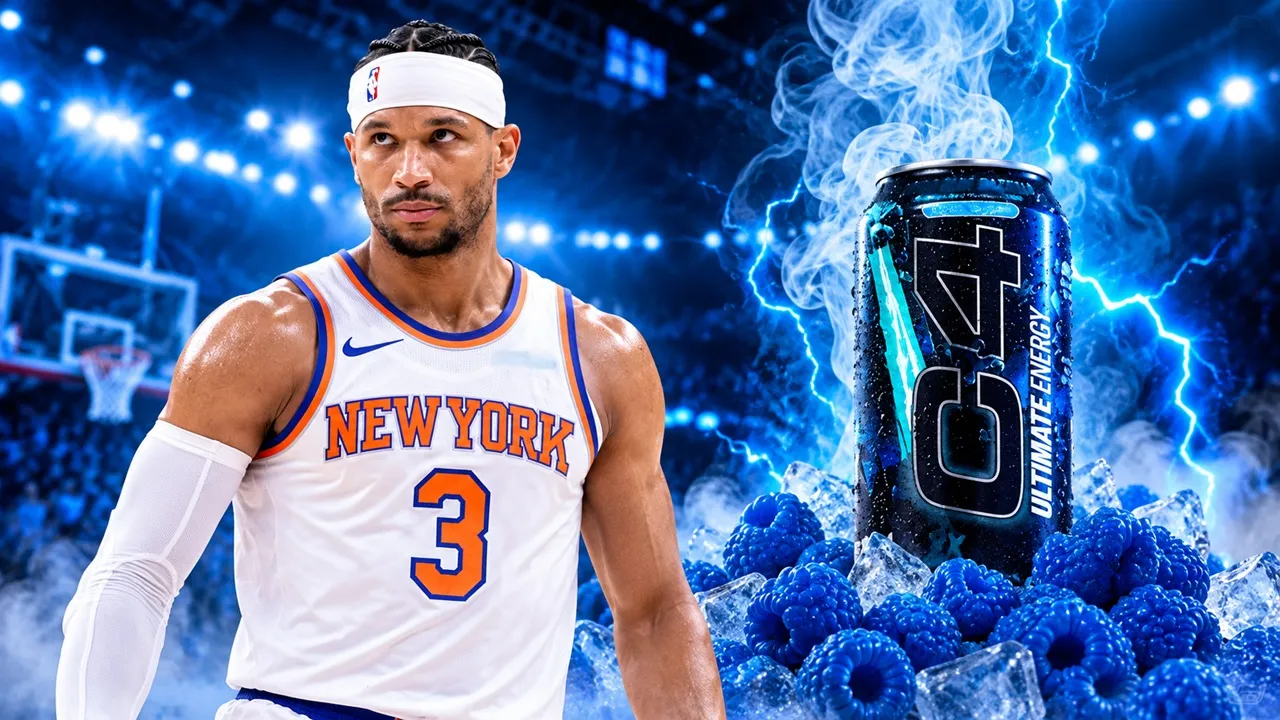
New York Knicks star Josh Hart is known for his relentless hustle, aggressive rebounding and high-energy style of basketball. But there is another detail about his game-day routine that has attracted attention: the energy drink he consumes before tip-off. Hart has spoken about drinking C4 Energy alongside a latte before games, revealing a pregame caffeine habit that raises an interesting question: how much can an energy drink really do for an NBA player?
For basketball fans, the story goes beyond a can of energy drink. It offers a look at how professional athletes approach preparation, alertness and the physical demands of an 82-game regular season.
What Energy Drink Does Josh Hart Drink?
Josh Hart drinks C4 Energy, a brand that announced a partnership with the New York Knicks guard in March 2026. In an interview with GQ published on May 7, 2026, Hart described having a latte and a C4 energy drink before games. He said his combined pregame caffeine intake typically reaches around 400–500 milligrams.
Hart is known for bringing intensity to both ends of the court. His game often involves chasing loose balls, fighting for rebounds, defending opponents and running through repeated possessions. His pregame routine has therefore become an interesting example of how an NBA player prepares mentally and physically for competition.
However, Hart’s personal routine should not be treated as a recommendation for other athletes or fans.
Josh Hart’s Pregame Energy Routine at a Glance
| Detail | What We Know |
|---|---|
| NBA player | Josh Hart |
| Team | New York Knicks |
| Energy drink | C4 Energy |
| Other pregame caffeine source | Latte |
| Reported total pregame caffeine | Around 400–500 mg |
| Brand partnership announced | March 5, 2026 |
| Interview discussing his routine | GQ, May 7, 2026 |
Sources: GQ interview and C4 Energy partnership announcement. Caffeine intake is Hart’s reported personal routine, not a recommended amount for the general public.
Why Do Basketball Players Use Caffeine Before Games?
Basketball requires repeated bursts of speed, jumping, quick changes of direction and sustained concentration. Players must also make split-second decisions while tired, particularly late in games.
Caffeine is a stimulant that can increase alertness and reduce the perception of fatigue. Research reviewed by the National Institutes of Health indicates that caffeine may improve certain aspects of exercise performance, although its effects vary by person and activity. <Cite refs={[“turn893934search2″,”turn893934search3”]}/>
For an NBA player, that potential benefit may sound appealing. But caffeine is only one part of preparation. Training, nutrition, hydration, recovery and sleep remain essential.
An energy drink cannot replace the physical conditioning needed to compete at the highest level.
Is 400–500 mg of Caffeine a Lot?
This is the most important part of Hart’s story.
The U.S. Food and Drug Administration says that up to 400 mg of caffeine per day is an amount not generally associated with negative effects for most healthy adults. Individual tolerance varies, however, and caffeine from coffee, energy drinks and other sources all contributes to the daily total. <Cite refs={[“turn893934search0″,”turn893934search10”]}/>
Hart’s reported 400–500 mg before a game is therefore a substantial amount, particularly because it is consumed in addition to his usual food and drink throughout the day.
| Caffeine consideration | Why It Matters |
|---|---|
| Alertness | Caffeine can temporarily increase alertness |
| Fatigue | It may reduce the perception of tiredness |
| Sleep | Late-day consumption can interfere with sleep |
| Heart rate | Excessive intake may cause a racing heartbeat or palpitations |
| Individual tolerance | The same dose can affect two people differently |
| Total daily intake | Coffee and other caffeinated products must also be counted |
The takeaway is straightforward: a routine that a professional athlete chooses for himself is not automatically appropriate for everyone. People who are sensitive to caffeine or have relevant medical conditions should be especially cautious.
Does C4 Energy Guarantee Better Basketball Performance?
No. An energy drink does not guarantee better shooting, faster reactions or more rebounds.
Caffeine may help some people feel more alert, and sports-nutrition research supports potential performance benefits in certain circumstances. But results depend on factors such as dose, timing, individual sensitivity and the type of physical activity. More caffeine does not necessarily mean better performance. <Cite refs={[“turn893934search2″,”turn893934search3”]}/>
Hart’s effectiveness on the court also comes from years of professional experience, physical conditioning, defensive instincts and effort. It would be misleading to credit his playing style or performance to one beverage.
His routine is best understood as one element of his personal preparation, not a secret formula that guarantees NBA-level results.
C4 Energy’s Connection With the NBA
Hart’s partnership is also part of the broader relationship between energy drink companies and basketball culture.
According to the March 2026 announcement, C4 Energy has partnerships across basketball, including with the New York Knicks, Boston Celtics and Miami Heat. Its collaboration with Hart connects the brand with a player whose identity is built around effort, intensity and an aggressive playing style. <Cite refs={[“turn147467view0”]}/>
Athlete partnerships can help brands reach fans who admire their favourite players. But an endorsement is not the same as independent scientific evidence that a product improves performance.
Fans interested in trying an energy drink should check its caffeine content, serving size, ingredients and any relevant warnings rather than choosing it solely because a professional athlete uses it.
Should Young Basketball Players Drink Energy Drinks?
Young athletes should not copy a professional player’s high-caffeine routine.
The FDA notes that medical experts advise against energy drinks for children and teenagers because of their caffeine and, in some products, sugar content. Excessive caffeine can contribute to anxiety, sleep problems, increased heart rate and other unwanted effects. <Cite refs={[“turn893934search0″,”turn893934search2”]}/>
For young basketball players, a sensible foundation is adequate sleep, regular meals, water and appropriate sports nutrition. Those basics matter far more than trying to imitate an NBA star’s pregame beverage.
The Real Lesson Behind Josh Hart’s Energy Drink Habit
Josh Hart’s C4 Energy routine offers a glimpse into the preparation of a modern NBA player. It also highlights the growing commercial connection between professional athletes and beverage brands.
But the biggest lesson is not that every basketball player needs an energy drink before tip-off. It is that professional athletes develop individual routines, and those routines do not necessarily translate to the general public.
Caffeine can play a role in sports performance, but it has limits and potential side effects. Hart’s story is interesting precisely because it shows both sides: the appeal of a pregame energy boost and the importance of understanding what goes into the body.
Final takeaway: Josh Hart has publicly discussed drinking C4 Energy and a latte before games, with a reported combined caffeine intake of around 400–500 mg. That makes his routine notable—but it is not a recommendation for fans to follow. For most people, understanding caffeine intake, protecting sleep and staying properly hydrated are more important than copying an NBA player’s energy drink choice.
Related News:
What Does It Really Cost to Gear Up Like an NBA Player? Shoes, Jerseys and More