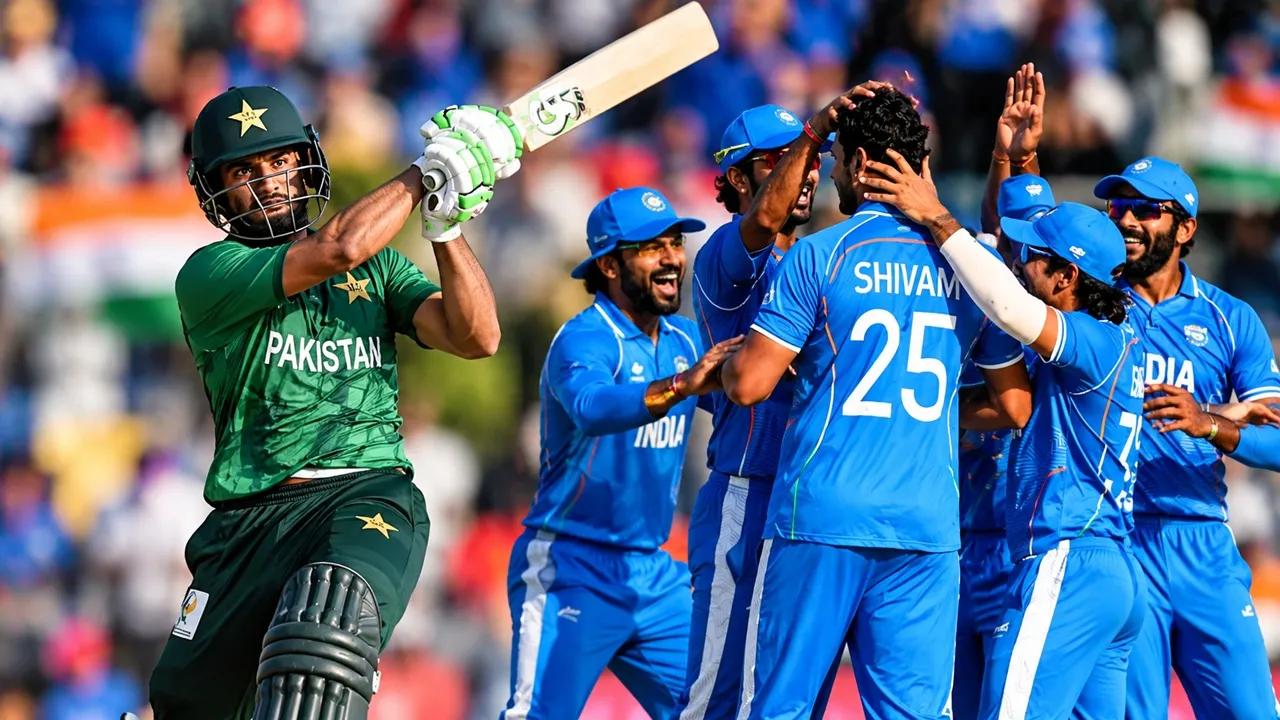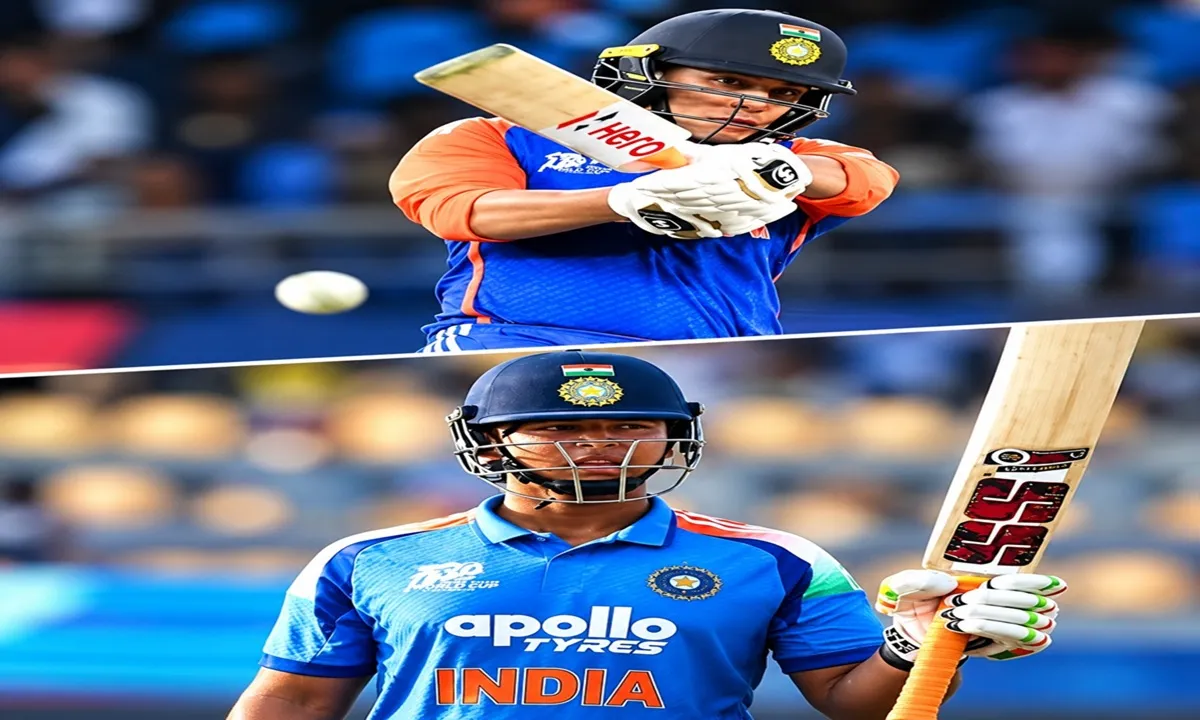
India vs New Zealand 3rd T20I: A 199-run target would normally demand patience, partnerships and a calculated finish. Abhishek Sharma and 15-year-old Vaibhav Sooryavanshi had a different idea. Their explosive opening partnership rewrote the men’s T20 International powerplay record, helping India defeat New Zealand by six wickets in Wellington on October 27, 2026, and secure an unassailable 3–0 lead in the five-match series.
Cricket has always rewarded big scores, but T20 cricket increasingly rewards something even more valuable: the ability to make a target look smaller than it is.
That was the story of India’s third T20I against New Zealand. The headline number was 118, but the bigger story was how quickly two left-handed batters removed the pressure from a chase that initially appeared challenging.
India vs New Zealand: The Numbers Behind the Record
| Match detail | Result |
|---|---|
| New Zealand | 198/3 in 20 overs |
| India | 199/4 in 13.2 overs |
| Result | India won by 6 wickets |
| Abhishek Sharma | 113 off 38 balls |
| Vaibhav Sooryavanshi | 45 off 19 balls |
| Opening partnership | 133 runs |
| Powerplay score | 118/0 |
| Series score | India lead 3–0 |
Source: Cricbuzz match scorecard and Reuters match report.
118 Runs in Six Overs: The Record That Changed the Chase
The opening six overs are usually about finding a balance between aggression and survival. Fielding restrictions create scoring opportunities, but losing early wickets can quickly change the direction of a match.
Abhishek and Sooryavanshi turned that conventional approach on its head.
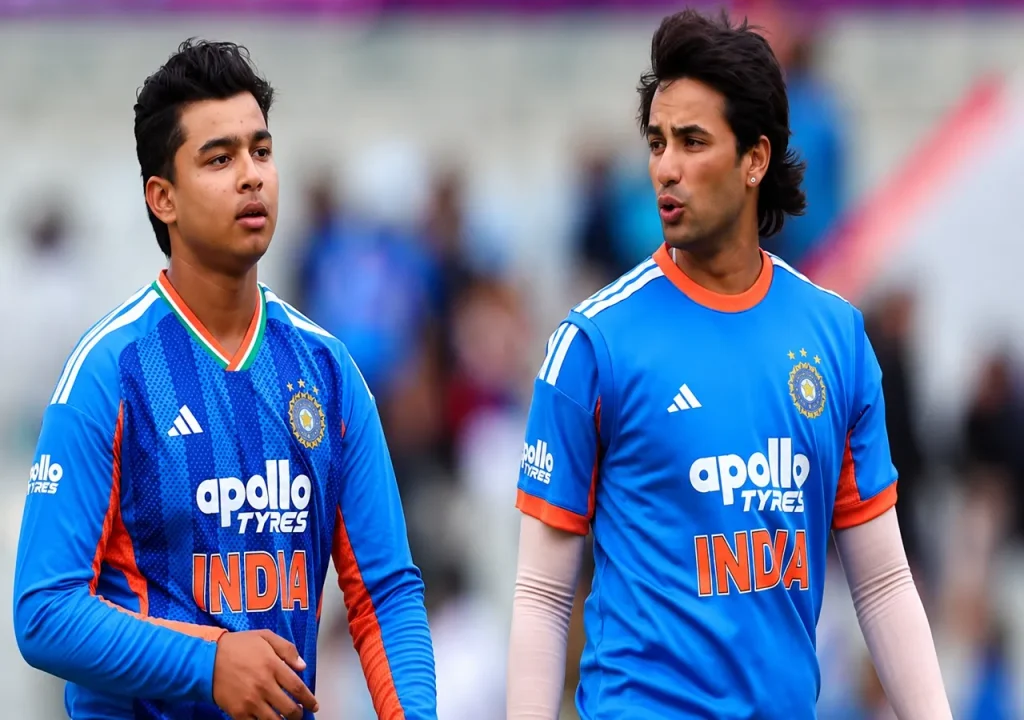
India raced to 118 without losing a wicket in the powerplay, surpassing the previous men’s T20I record of 116 without loss, set by Romania against Serbia in 2021.
The pair attacked from the beginning, forcing New Zealand’s bowlers to defend rather than dictate terms. Boundaries arrived so frequently that the required run rate stopped being a concern almost immediately.
The partnership also demonstrated the value of using the fielding restrictions aggressively. Instead of allowing the target to dictate the tempo, India’s openers dictated the tempo themselves.
By the end of the powerplay, New Zealand needed a breakthrough simply to regain control of the contest.
Abhishek Sharma’s 35-Ball Century Was More Than a Big Score
Abhishek delivered the defining individual performance of the match, smashing 113 runs from just 38 deliveries. He reached his century in 35 balls, continuing his remarkable run of explosive T20I batting.
His innings was built around relentless boundary hitting. He struck 11 sixes and nine fours, repeatedly punishing deliveries that allowed him to free his arms.
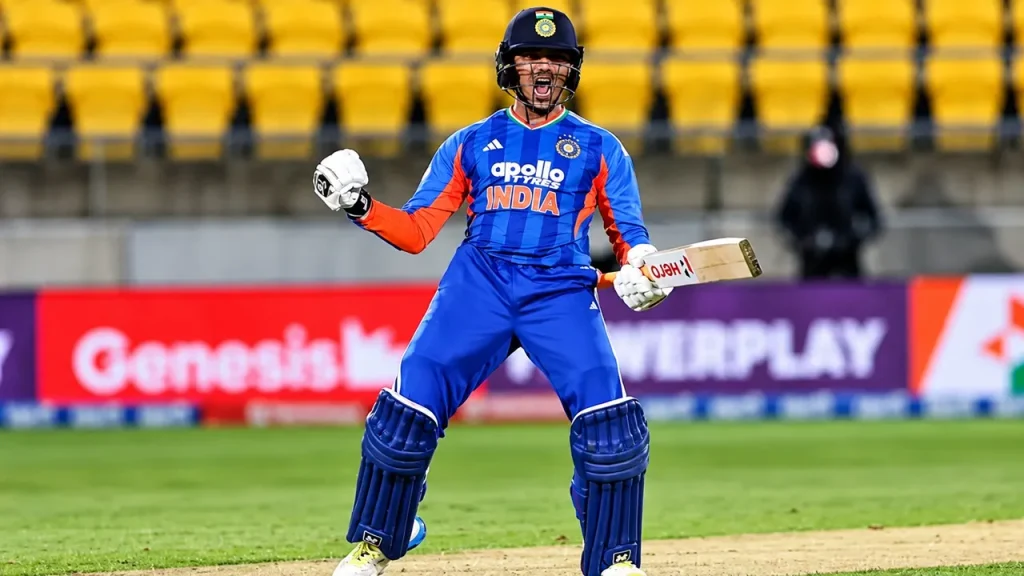
What made the innings especially damaging was its timing. Abhishek did not accelerate only after settling in; he attacked from the opening overs, ensuring New Zealand never established sustained pressure.
He also benefited from a reprieve on 92 when captain Mitchell Santner dropped a catch. Abhishek went on to reach his century before eventually being dismissed by Kyle Jamieson.
The result was a performance that combined power, confidence and an exceptional understanding of the situation.
Vaibhav Sooryavanshi: The 15-Year-Old Who Made the Record Possible
Abhishek’s century understandably dominated the headlines, but Sooryavanshi’s contribution was equally important to the way the chase unfolded.
The teenage batter scored 45 from 19 balls, including four fours and four sixes, providing India with an aggressive start at the other end.
His role was not simply to support an established star. He actively participated in the assault, ensuring New Zealand could not concentrate on slowing down just one batter.
The pair added 133 runs in only 7.1 overs before Sooryavanshi was dismissed. By then, India had already gained a decisive advantage.
That partnership illustrates an important principle in T20 cricket: two batters attacking together can place greater pressure on a bowling side than one player producing an isolated big innings.
Sooryavanshi’s contribution also gave the performance a generational dimension. A 15-year-old and an established international opener combined to produce one of the most extraordinary starts seen in men’s T20Is.
New Zealand Scored 198. Why Was That Not Enough?
New Zealand’s batting performance was competitive on paper.
Daryl Mitchell remained unbeaten on 89 from 52 balls, while Finn Allen contributed 40 from 25 deliveries and Bevon Jacobs finished unbeaten on 39 from 23. The hosts reached 198/3 in their 20 overs.
On many occasions, a total close to 200 would create substantial pressure in a T20 international. But the problem was not necessarily the size of New Zealand’s score; it was how little time India needed to chase it.
India reached 199/4 in only 13.2 overs, winning with 40 balls remaining.
That difference matters. A target of 199 can be difficult when wickets fall regularly or the asking rate climbs. When the opening partnership produces 118 runs in six overs, however, the chase becomes a very different exercise.
New Zealand’s bowlers were left searching for a way to slow the scoring rather than building pressure through the scoreboard.
The Bigger Tactical Lesson: T20 Cricket Is Becoming a Powerplay Game
India’s performance offers a glimpse into how the shortest format is evolving.
A strong powerplay has always mattered, but the ability to score at an extraordinary rate without losing a wicket changes the entire match equation.
Three lessons stand out from the Wellington contest.
1. Early momentum can outweigh a seemingly imposing target.
A team chasing 199 does not necessarily need to wait until the final overs to take control. A dominant opening partnership can put the contest beyond the opposition’s preferred plans before the middle overs begin.
2. Partnerships matter as much as individual records.
Abhishek’s century was spectacular, but Sooryavanshi’s attacking start helped make the record powerplay possible. Their combined impact was greater than simply adding two individual scores together.
3. Bowling discipline becomes crucial against aggressive openers.
New Zealand conceded 13 extras, including 10 wides and two no-balls, according to Cricbuzz’s match commentary. Against batters scoring so freely, additional deliveries can make an already difficult situation worse.
The lesson for opposing teams is clear: early wickets and disciplined execution become essential when facing India’s attacking top order.
India Seal the Series With Two Matches Remaining
The victory gave India an unassailable 3–0 lead in the five-match series, with the fourth T20I scheduled for October 30 in Auckland.
For India, the immediate reward is the series win. The larger benefit is the confidence that comes from successfully executing an aggressive game plan in overseas conditions.
For New Zealand, the remaining matches offer an opportunity to respond, particularly by finding ways to disrupt India’s opening partnership before it gains momentum.
The hosts will need more than a good total if they want to challenge India’s current batting approach. Their bowling plans must account for both the pace of scoring and the possibility that attacking one opener may not be enough to stop the other.
India’s 118-run powerplay against New Zealand was not just a statistical achievement. It was a demonstration of how quickly T20 cricket can change when two batters combine aggression with confidence.
Abhishek Sharma supplied the extraordinary century, Vaibhav Sooryavanshi provided fearless support, and their 133-run partnership laid the foundation for a six-wicket victory.
New Zealand had scored 198 runs. India made the target look far smaller than that.
The record will be remembered for its number, but its deeper significance lies in the pressure it created, the time it saved and the message it sent about India’s attacking intent in T20 cricket.
Match report based on the Cricbuzz scorecard and Reuters coverage published on October 27, 2026.
Related News:
Best Cricket Kits in India: Top Picks from SG, DSC, Gray Nicolls and KLAPP