
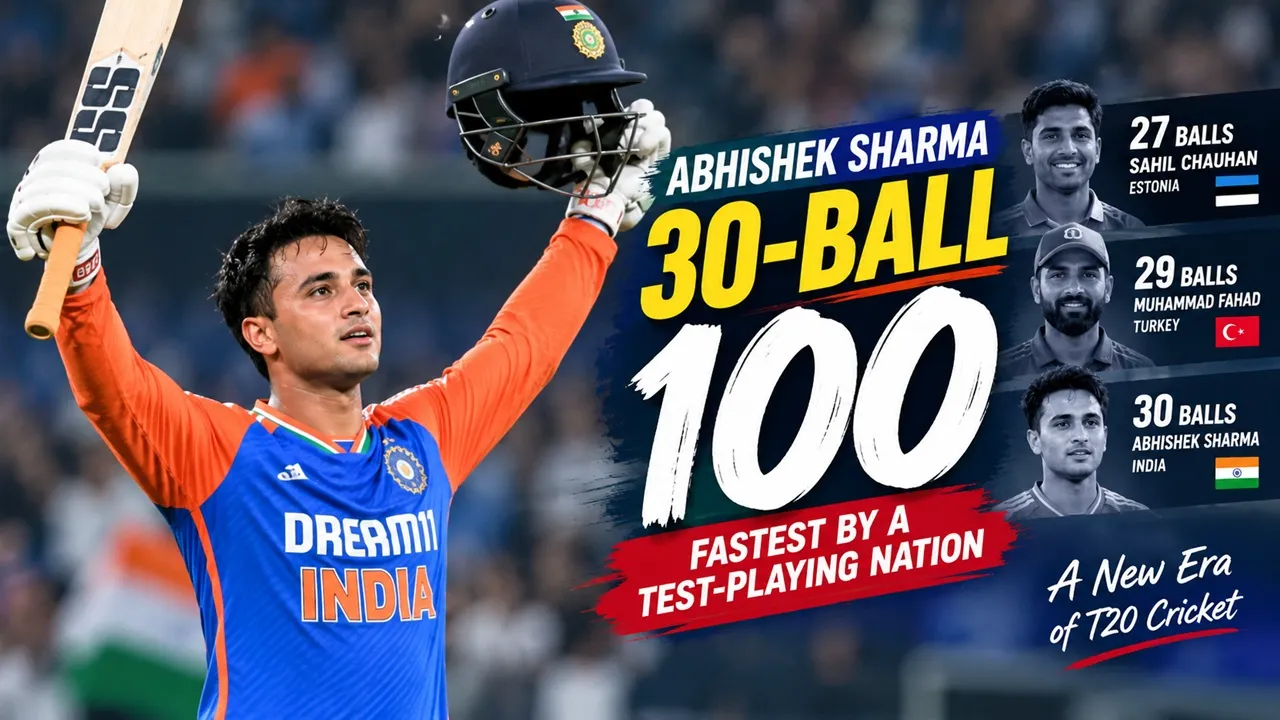
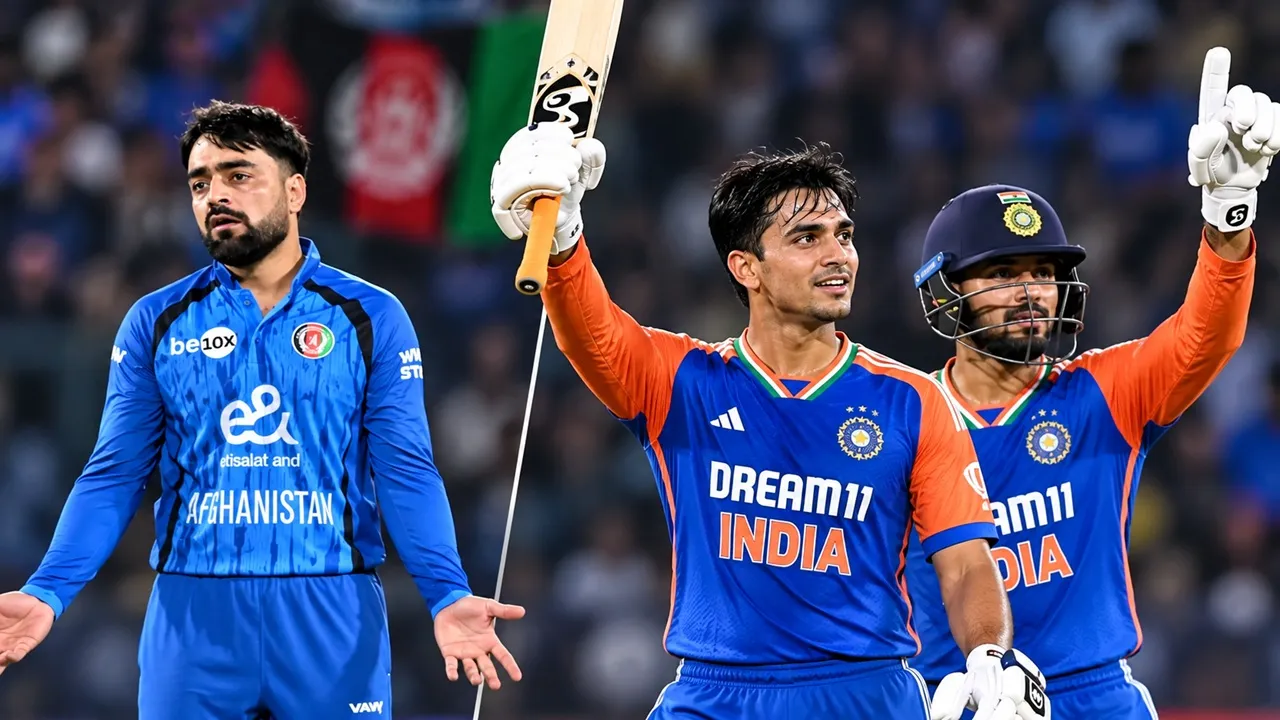
Abhishek Sharma has just added another extraordinary chapter to the history of men’s T20I cricket.
During the third T20I against Afghanistan in New Delhi on September 17, 2026, the India opener reached his century from just 30 balls, producing one of the fastest hundreds ever seen in international T20 cricket.
But there is an interesting twist to the record.
Abhishek Sharma is not the fastest T20I centurion overall.
Two batters still stand ahead of him — Estonia’s Sahil Chauhan and Turkey’s Muhammad Fahad.
What makes Abhishek’s achievement historic is that he has become the fastest batter from a Test-playing nation to score a T20I century.
The 30-ball record that changed the list
Abhishek Sharma did not simply race to three figures. He accelerated dramatically after an already explosive start.
He reached his fifty in only 16 balls before scoring another 51 runs from his next 14 deliveries to complete his century in 30 balls. His innings featured 9 fours and 10 sixes, underlining the extraordinary power-hitting involved.
That 30-ball hundred moved Abhishek above the previous benchmark for an Indian batter.
Before this innings, India’s fastest men’s T20I century belonged to Rohit Sharma, who reached three figures from 35 balls against Sri Lanka in 2017.
Abhishek has now gone five balls quicker.
The fastest T20I centuries: where does Abhishek stand?
The current top of the men’s T20I century list has a fascinating pattern.
| Batter | Team | Balls to 100 | Opponent |
|---|---|---|---|
| Sahil Chauhan | Estonia | 27 | Cyprus |
| Muhammad Fahad | Turkey | 29 | Bulgaria |
| Abhishek Sharma | India | 30 | Afghanistan |
| Finn Allen | New Zealand | 33 | South Africa |
| Jan Nicol Loftie-Eaton | Namibia | 33 | Nepal |
| Sikandar Raza | Zimbabwe | 33 | Gambia |
Sahil Chauhan remains the overall record-holder after reaching his hundred in just 27 balls for Estonia against Cyprus in 2024. ESPNcricinfo’s records list Chauhan’s remarkable 144 not out among the leading T20 innings.
Muhammad Fahad then produced another extraordinary performance for Turkey against Bulgaria in 2025. He reached his hundred from 29 balls and eventually finished with 120 from 34 deliveries, including 10 fours and 12 sixes. ESPN’s scorecard records the 29-ball hundred.
Abhishek Sharma has now become the third batter in this elite group to reach a T20I century inside 30 balls.
Why Abhishek’s record is different
The number “30” does not tell the whole story.
The more significant part of Abhishek’s achievement is who he represents.
Sahil Chauhan and Muhammad Fahad produced their record-breaking hundreds for Estonia and Turkey respectively. Abhishek’s 30-ball century, however, is the fastest T20I hundred by a batter representing an ICC full-member/Test-playing nation.
Before Abhishek’s innings, the fastest such centuries were the 33-ball hundreds by Namibia’s Jan Nicol Loftie-Eaton, Zimbabwe’s Sikandar Raza and New Zealand’s Finn Allen.
Abhishek has therefore pushed the benchmark for full-member nations from 33 balls down to 30.
From 50 to 100 in only 14 balls
Perhaps the most remarkable part of Abhishek’s innings was what happened after his fifty.
He needed only 16 deliveries to reach 50.
Instead of slowing down, he accelerated further.
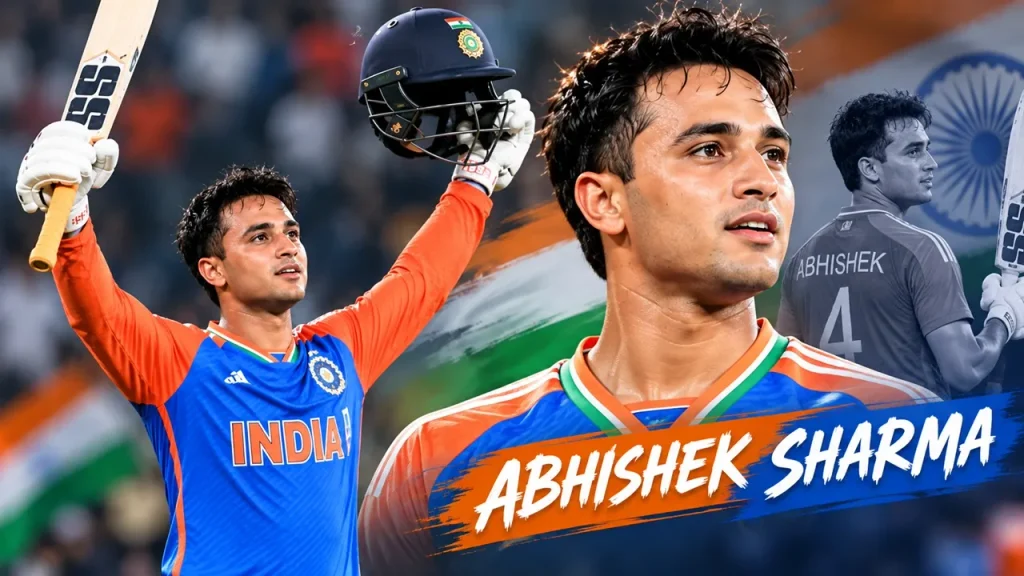
The next 14 balls produced another 51 runs, allowing him to complete his century from the 30th delivery he faced.
That sequence illustrates how dramatically T20 batting has evolved.
A batter reaching 50 from 16 balls would already be considered an exceptional display of power-hitting. Abhishek effectively doubled that scoring rate over the next phase and reached three figures before many T20 innings have even reached the halfway point.
The record India had been waiting for
Indian cricket has produced some of the most destructive T20 batters in the world.
Rohit Sharma’s 35-ball century against Sri Lanka stood as India’s fastest T20I hundred for almost nine years.
Abhishek has now taken that record to another level.
His 30-ball century is also significant because India’s previous fastest T20I hundred came from one of the most accomplished power-hitters of the modern era.
The record has therefore passed from one generation of Indian T20 batting to another.
The global record is still 27 balls
Despite Abhishek’s remarkable achievement, the overall record remains with Sahil Chauhan.
Chauhan produced his historic innings for Estonia against Cyprus on June 17, 2024. He reached his hundred in 27 balls and finished unbeaten on 144 from 41 deliveries. ESPNcricinfo’s records list Chauhan’s 144 not out among the highest individual T20 innings.
Fahad came even closer to that mark a year later.
His 29-ball century for Turkey moved him to second on the all-time list, leaving just two balls between his record and Chauhan’s mark.
Now Abhishek has arrived at 30 balls.
That means the gap between the world’s fastest T20I century and the fastest by a batter from a Test-playing nation is currently only three deliveries.
A new T20I benchmark for full-member cricket
Abhishek Sharma’s innings also highlights an important feature of modern T20 cricket.
The fastest overall T20I records have increasingly come from matches involving a wider range of international teams. The emergence of Chauhan and Fahad at the top of the list is a good example.
But Abhishek’s performance has created another statistical category that will attract attention:
Fastest T20I century by a batter from a Test-playing nation — 30 balls, Abhishek Sharma.
And with players increasingly attacking from the opening delivery, even that benchmark may not remain untouched forever.
For now, however, the record belongs to Abhishek.
The fastest T20I hundreds at a glance
- 27 balls — Sahil Chauhan, Estonia vs Cyprus, 2024
- 29 balls — Muhammad Fahad, Turkey vs Bulgaria, 2025
- 30 balls — Abhishek Sharma, India vs Afghanistan, 2026
- 33 balls — Finn Allen, New Zealand vs South Africa, 2026
- 33 balls — Jan Nicol Loftie-Eaton, Namibia vs Nepal, 2024
- 33 balls — Sikandar Raza, Zimbabwe vs Gambia, 2024
Abhishek Sharma’s 30-ball century therefore sits at the intersection of two records: it is third-fastest overall and fastest among batters from Test-playing nations.
The bigger question now is not whether T20 batting has become faster — the record books have already answered that.
The question is how much further the 30-ball barrier can fall.
Related News:
India’s West Indies Squad: The Real Story Is Not Just Rohit Sharma and Virat Kohli’s Return





wow…supper……