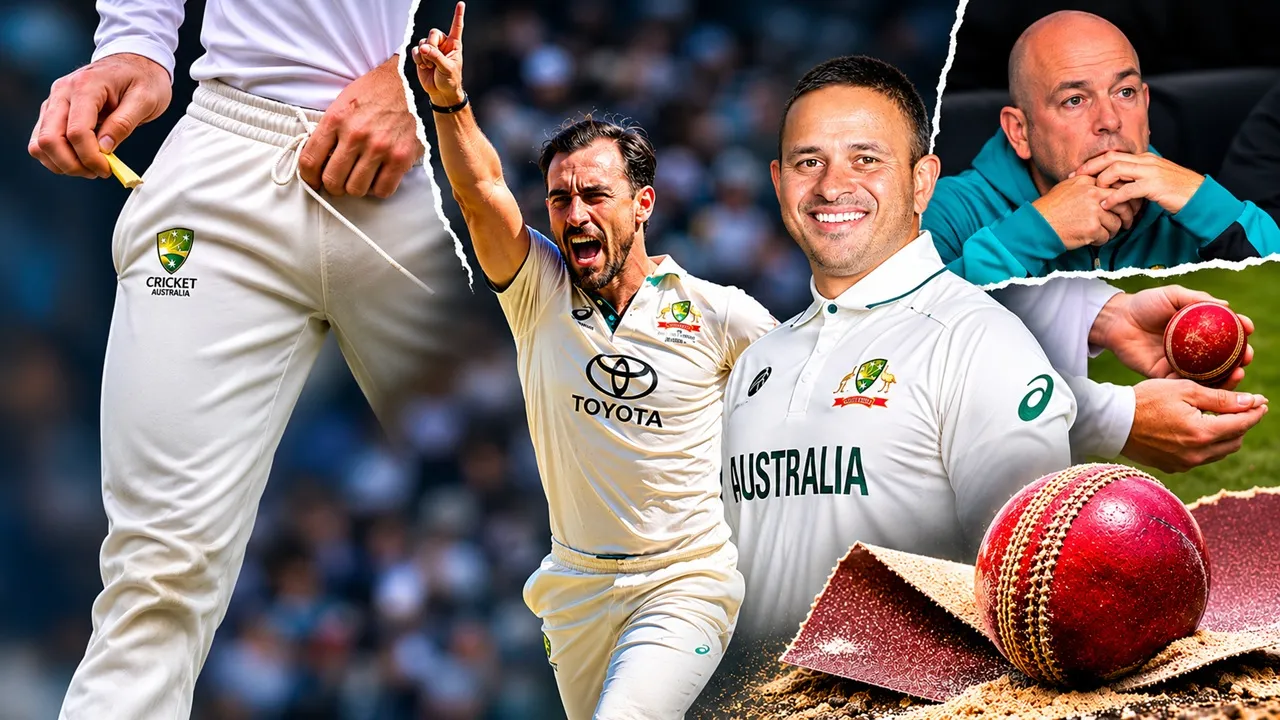
Australian cricket’s biggest controversy has returned to the spotlight, but this time the debate is not just about who tampered with the ball. It is about who knew, who stayed silent and whether the truth was ever fully established.
The Sandpaper Scandal was supposed to be a closed chapter in Australian cricket history. Eight years after the infamous events in South Africa, however, the controversy has returned with fresh revelations, conflicting accounts and uncomfortable questions.
This time, the spotlight is on Mitchell Starc, who has firmly stood by the statement made by Australia’s bowling group in 2021, denying prior knowledge of the ball-tampering operation.
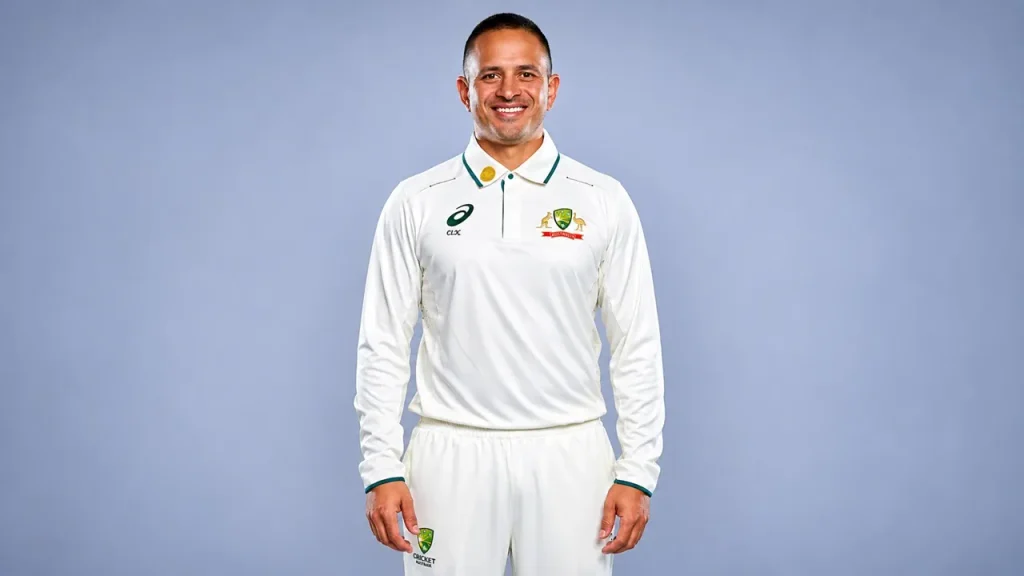
His position comes after former Australian opener Usman Khawaja made fresh claims in his autobiography, Sabr, suggesting that knowledge of the ball-tampering incident was not limited to the three players who were punished.
Former vice-captain David Warner has also backed Khawaja’s version, describing his claims as 100 per cent accurate.
But Starc has refused to change his position.
And that is what makes this latest development particularly interesting: Australia now has two different versions of an incident that once damaged the reputation of its cricket team worldwide.
Mitchell Starc Refuses to Change His Version of Events
Starc has made it clear that his recollection of the 2018 incident remains exactly as he described it in 2021.
At that time, Starc, Pat Cummins, Josh Hazlewood and Nathan Lyon collectively stated that they had no knowledge of a foreign substance being taken onto the field to alter the condition of the ball until they saw the footage on the big screen at Newlands.

Speaking on November 10, Starc reiterated that his position had not changed despite the latest revelations.
He also rejected the suggestion that he knew about sandpaper being used during the earlier Test against South Africa at Port Elizabeth.
Starc has not read Khawaja’s book and indicated that the former Australian opener should explain the claims himself.
His response is significant because it shows that the disagreement is no longer simply about what happened in Cape Town. It is about how different members of the same team remember the events.
Usman Khawaja’s Claims Have Changed the Narrative
For years, the Sandpaper Scandal was largely associated with three names: Steve Smith, David Warner and Cameron Bancroft.
However, Khawaja’s autobiography has brought a different perspective to the story.
According to Khawaja, the knowledge of ball tampering was not restricted to those three players. He has argued that the entire team should take collective responsibility.
He also described an earlier incident during the second Test at St George’s Park in Port Elizabeth, where sandpaper was allegedly used on the ball.
Khawaja’s claims have raised questions about whether the original investigation captured the full picture.
Warner has supported his former teammate’s account, adding further pressure to an already sensitive debate.
However, these remain disputed claims, and they should not be treated as independently established findings.
The Biggest Question: Were Three Players Made to Carry the Entire Blame?
Perhaps the most important aspect of this renewed controversy is the question of collective responsibility.
In 2018, Steve Smith, David Warner and Cameron Bancroft received suspensions for their roles in the ball-tampering incident.
Smith and Warner were handed 12-month bans, while Bancroft received a nine-month suspension.
The punishment was severe, and the incident became one of the darkest moments in modern Australian cricket.
But Khawaja’s latest account raises a difficult question: if more members of the team knew about what was happening, did the original investigation identify everyone who should have been held accountable?
This does not automatically mean that every player was involved or knew about the plan. It does, however, explain why the debate has returned with such intensity.
The difference between individual responsibility and collective responsibility is now at the heart of the controversy.
Cricket Australia Has Little Interest in Reopening the Case
While the debate has intensified, Cricket Australia chief executive Todd Greenberg has indicated that there is no compelling reason to reopen the investigation.
Greenberg has maintained that the governing body remains comfortable with the findings of the original inquiry.
He has also acknowledged that the different versions of events make it difficult to reach a common understanding of what happened.
This position creates another layer to the controversy.
If former teammates continue to disagree about the same incident, can the cricketing world ever get a complete account of what happened in 2018?
David Warner has questioned the original investigation process, describing it as rushed and flawed, and has called for greater accountability and transparency.
Pat Cummins Could Become the Next Important Voice
Another important name in this discussion is Australia’s current Test captain, Pat Cummins.
Cummins was part of the bowling group that issued the 2021 statement alongside Starc, Hazlewood and Lyon.
With the controversy resurfacing, attention has now turned towards whether he will offer any further explanation.
On November 12, Cummins indicated that he was ready to address questions from the media, inviting journalists to attend his training session on Friday.
His response could become an important development in a story that has once again divided Australian cricket.
The Sandpaper Scandal Is No Longer Just About a Piece of Sandpaper
The original scandal shocked the cricketing world because of what happened on the field.
But the latest developments suggest that the bigger issue may be what happened away from the cameras: the conversations, the investigation, the decisions and the different versions that have emerged over the years.
Mitchell Starc is standing by his recollection. Usman Khawaja is demanding collective accountability. David Warner is supporting Khawaja, while Cricket Australia sees no compelling reason to reopen the case.
There may never be complete agreement among those involved.
But one thing is clear: the Sandpaper Scandal has returned to challenge Australia’s cricketing history once again.
And eight years later, the biggest question is no longer simply who used the sandpaper.
It is whether the full story was ever told.
Related News: