Indian cinema is no longer defined by a single formula for box office success. While some films aim to become nationwide theatrical events, others build their momentum through strong regional connections and carefully targeted audiences.
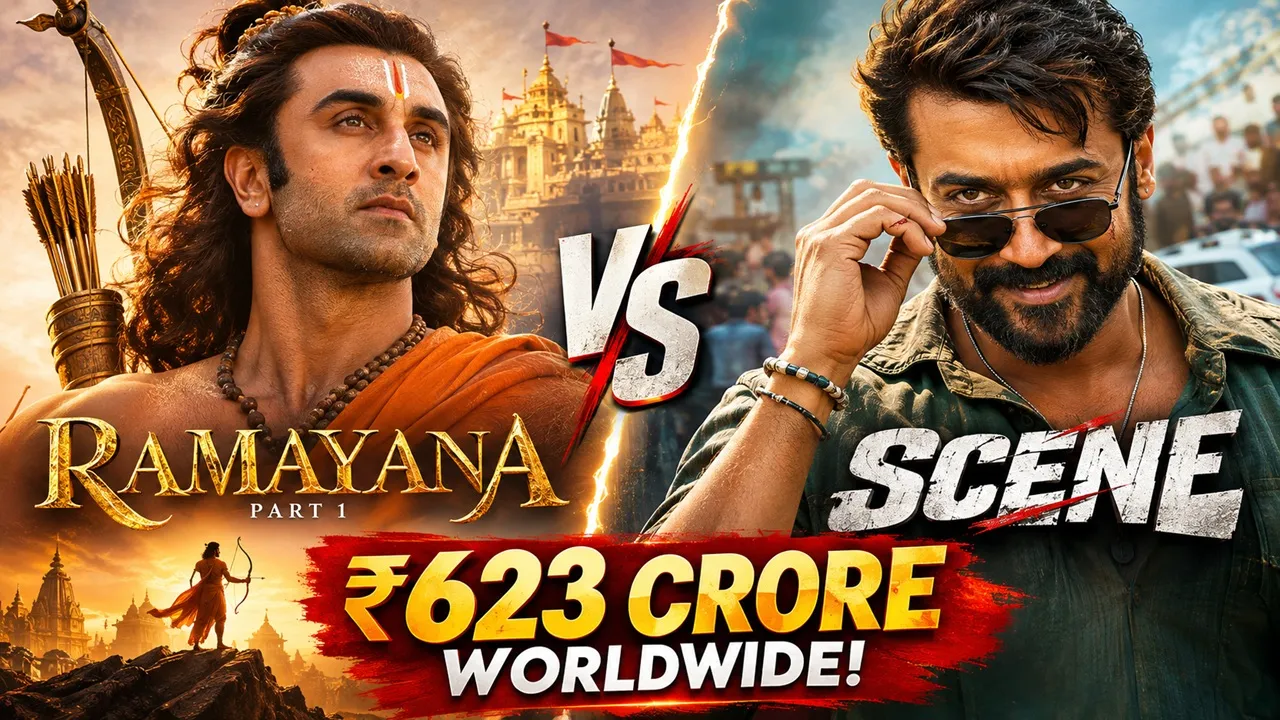
The latest box office performances of Ramayana Part 1 and OM Chapter 1: Udhiram offer an interesting example of this changing landscape.
At first glance, the two films may appear to belong to completely different worlds. One is a large-scale mythological spectacle with ambitions extending far beyond India, while the other is an action thriller led by some of the most recognisable names in Indian cinema.
But their box office journeys reveal something more interesting: there is more than one way to succeed in today’s theatrical market.
Ramayana Is Building Its Success Beyond a Single Language
Ramayana Part 1 has demonstrated the commercial potential of a genuinely multilingual theatrical release.
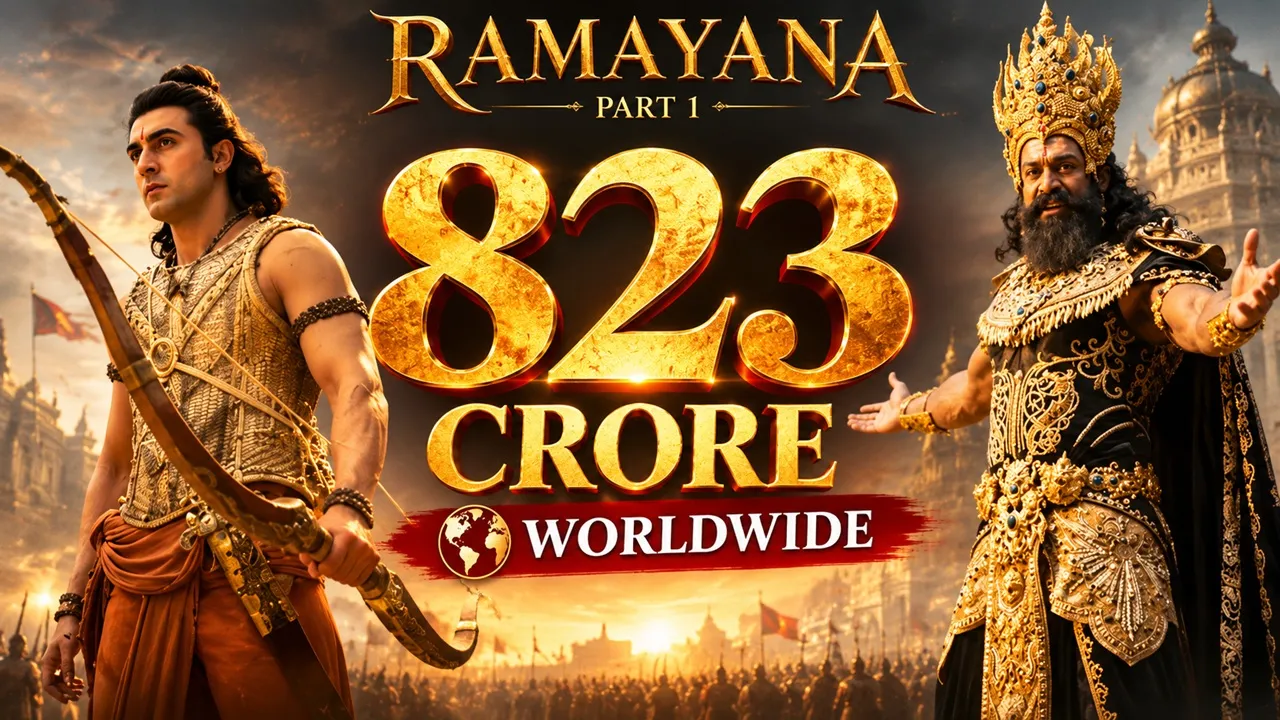
According to Sacnilk‘s November 21, 2026 update, the film has collected approximately ₹879.50 crore in India net collections and ₹1,573.95 crore in worldwide gross after 16 days.
What makes these figures particularly interesting is the film’s performance across different language markets.
Hindi remains its biggest contributor, generating ₹669 crore in net collections. However, the film has also attracted substantial business from Kannada, Telugu, Malayalam and Tamil audiences.
Its overseas gross has reached ₹523 crore, accounting for approximately 33.2% of its worldwide collection.
This is an important aspect of its theatrical performance. The film is not relying exclusively on its domestic audience. Its international business has become a significant part of its overall commercial story.
However, the latest figures also indicate that sustaining momentum becomes increasingly difficult after the initial release period. The film collected ₹564.60 crore during its first eight days, compared with ₹299.15 crore in the following seven days.
The slowdown is worth watching, but its overall worldwide performance has already established a substantial theatrical footprint.
OM Chapter 1 Is Taking a Different Route
While Ramayana is building a broad multilingual presence, OM Chapter 1: Udhiram has started its theatrical journey with a more concentrated regional identity.
Starring Dhanush, Mammootty and Sai Pallavi, the action thriller opened in cinemas on November 20, 2026.
Sacnilk estimates that the film earned ₹18.10 crore net in India on its first day, with an India gross of ₹21 crore. Its reported worldwide gross reached ₹33 crore, including ₹12 crore from overseas markets.
The language-wise breakdown tells an interesting story.
Tamil contributed ₹13.60 crore, making it the film’s biggest market. Telugu added ₹4.10 crore, while Hindi contributed approximately ₹40 lakh.
This distribution highlights the importance of regional audience connections. The film’s opening was driven primarily by Tamil-speaking audiences, with additional support from Telugu markets and overseas territories.
Its overseas contribution is particularly noteworthy. International markets accounted for approximately 36.4% of its reported worldwide gross on the opening day.
Of course, one day of box office performance cannot determine the film’s long-term success. Its ability to maintain audience interest over the coming days will be much more important.
The Real Story Is Not About Which Film Is Bigger
Comparing the two films purely through their box office totals would miss the bigger picture.
Ramayana has already completed 16 days in theatres, while OM Chapter 1 has only completed its opening day in the figures being compared. Their release timelines and commercial objectives are entirely different.
A more meaningful comparison is the way they are connecting with audiences.
Ramayana’s performance demonstrates the potential of large-scale multilingual storytelling, where a film can generate substantial business across multiple Indian language markets and international territories.
OM Chapter 1, meanwhile, illustrates how a strong regional opening, supported by established performers and overseas demand, can create a promising theatrical starting point.
Neither approach is automatically better than the other.
A film does not necessarily need to dominate every Indian language market to become commercially successful. Equally, a massive opening does not guarantee sustained box office performance.
What ultimately matters is how effectively a film converts initial curiosity into repeat audience interest and consistent theatrical footfalls.
Can Regional Cinema Compete With Nationwide Blockbusters?
This is perhaps the most interesting question emerging from the performances of these two films.
For years, the Indian box office conversation has often focused on the biggest openings, superstar records and massive worldwide totals.
But the theatrical market is becoming increasingly diverse.
Regional films are finding audiences beyond their traditional territories, while large-scale productions are increasingly designed to appeal to viewers across linguistic and geographical boundaries.
The international contribution to both films also highlights another important development: overseas audiences are becoming an increasingly significant part of the commercial equation for Indian cinema.
The success of a film is no longer determined by its performance in just one city, state or language market.
Two Different Paths, One Changing Industry
Ramayana and OM Chapter 1 represent two different commercial journeys.
Ramayana is demonstrating the financial potential of a large-scale multilingual release, while OM Chapter 1 has opened with a strong Tamil-led performance and a notable overseas contribution.
It is too early to predict the final box office outcome of either film based on these figures alone. Ramayana still has to demonstrate how much further it can sustain its theatrical run, while OM Chapter 1 must prove that its opening-day momentum can translate into a successful extended run.
But one thing is becoming increasingly clear: Indian cinema is no longer dependent on just one kind of box office success.
Sometimes, a film wins through nationwide appeal. At other times, a strong regional connection can be just as valuable.
And that may be the biggest story behind these two very different releases.
Related News: